
Hollow cubes solved
“Turned out to be water volume at the inlet valve, not the ice maker itself. They explained the difference clearly.”
Paul C. · Northbrae
Hollow or slow Sub-Zero cubes in Berkeley almost always mean the mold is under-filling, so Berkeley Sub-Zero Repair measures fill volume per cycle and checks the frozen fill tube, water inlet valve and filter before naming a part. We work the Gourmet Ghetto near 94702. Call 510-390-9712 for measured water-side diagnosis.
When a Sub-Zero ice maker in Berkeley turns slow, jams, or starts dropping hollow cubes, the fault is almost always on the water side — a fill tube, an inlet valve, or a tired filter — not the compressor. We are an independent Sub-Zero counter working kitchens from the Gourmet Ghetto up into the hills, where damp marine air and harder East Bay water shorten filter life and freeze fill tubes early. The same intake note often mentions a wine column drifting several degrees; we look at both. You get a real diagnosis with measured water volume before any quote — an honest first opinion, not a sales pitch.
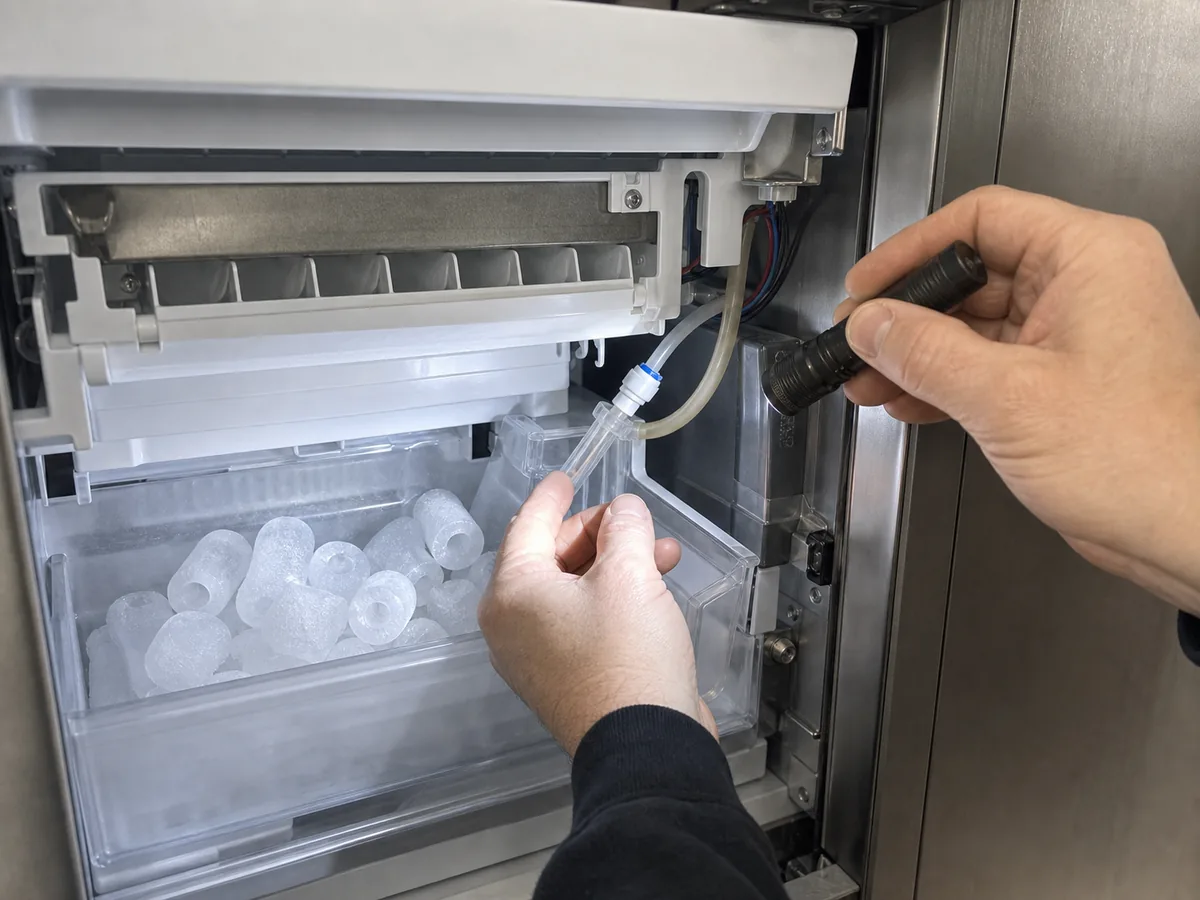
Not every ice fault is plumbing. A Sub-Zero ice maker is run by a small control board that watches a thermistor — a temperature sensor that tells the maker when the mold is cold enough to harvest. In plain terms: the thermistor is the thermometer, the board is the timer, and if either is off, the maker can skip cycles, run at the wrong moment, or post a display alarm even when the water side is fine. The way we confirm it is electrical and not plumbing is direct: we measure the thermistor's resistance against its temperature, watch the harvest cycle actually fire, and read any stored code against your serial tag rather than a generic chart. The honest limitation is that a board fault can imitate a starved water line and the reverse is also true, so we test water volume and the sensor before naming either — a swapped board that did not fix anything is the most expensive wrong guess on this list.
Most owners notice it at the ice bin, not the display. A healthy Sub-Zero maker drops a steady tray of solid, clear cubes on a regular cycle and refills quietly. The abnormal versions are easy to recognize once you know them: slow production where the bin never fills the way it used to; jammed ice where cubes fuse into a block or the ejector arm stalls; hollow or partial cubes that are thin-shelled, small, or crescent-shaped because the mold never filled; and no water at all, where the maker cycles but nothing arrives. Cloudy or off-tasting ice is its own signal, usually pointing at the filter.
When to stop using it: if you see water pooling under or behind the unit, hear the inlet valve buzzing or hammering, or find the fill tube iced into a solid plug, turn the household water shutoff off and leave it off until it is looked at. A slow leak against cabinetry and flooring is the one ice-maker symptom that gets worse the longer it waits.
We work this list in order on a visit, because the cheap, fast checks rule out the expensive ones. Each row is what you would see, how we test it, and the typical repair.
| Cause | Signs | Test | Typical repair |
|---|---|---|---|
| 1. Fill-tube freeze-up | Slow or no ice, hollow cubes, a visible ice plug at the tube into the mold. | Inspect the fill tube; thaw and watch whether a normal fill returns. | Clear the tube, correct the cause of the freeze (low temp, slow fill); often the cheapest fix. |
| 2. Clogged water filter | Small or hollow cubes, slow production, cloudy or off-taste ice; filter past interval. | Check filter age and flow; compare cube size before and after a fresh filter. | Replace the overdue filter with the correct OEM cartridge for your serial. |
| 3. Water inlet valve | Buzzing or hammering at fill, weak or no water, partial cubes despite a good filter. | Measure fill volume per cycle and check the valve solenoid for proper actuation. | Replace the inlet valve; verify steady, full fills after. |
| 4. Ejector module / thermistor | Cubes fuse or jam, arm stalls, missed cycles, or a display alarm with water present. | Read thermistor resistance vs. temperature; watch the harvest cycle fire. | Replace the ejector module or sensor; confirm a clean harvest cycle. |
| 5. Water line / supply | Drip behind the unit, no water, kinked or corroded line, leak at a fitting. | Trace from the household shutoff to the inlet; check fittings and the line for leaks. | Replace the failed line section, fitting or shutoff with factory-authorized Sub-Zero OEM components. |
Berkeley's marine layer does real work on an ice maker. Fog cycles and high humidity keep cabinetry damp, which swells gaskets and lets a freezer run a touch colder or frostier than it should — exactly the condition that freezes a fill tube into a plug. Salt air off the bay corrodes line fittings and the inlet-valve body over years, and the area's harder water leaves scale that shortens filter life and narrows the valve's orifice, so cubes shrink before the part fully fails. Up in the Berkeley Hills and around Claremont, tight built-in cabinetry means the water line and shutoff are often pinned behind millwork; we plan that access before the visit so the unit comes forward without scuffing custom panels. The fix is rarely just the part — it is the part plus the local condition that wore it.
Berkeley's EBMUD water is soft (~2–3 grains/gal), so Sub-Zero ice problems here are usually fill-tube freeze-ups, inlet-valve or pressure issues — not limescale. Typical ice/water repair: $285–$640.
An ice-and-water call rarely stops at the Berkeley line. On a recent run down into Oakland, a 600-series owner described the classic pattern — weeks of shrinking, hollow cubes that the household had blamed on the filter. A fresh filter helped for a day, then the cubes went thin again. Measuring fill volume showed the water inlet valve was actuating but barely passing water; scale had narrowed the orifice. We replaced the valve, confirmed full fills, and the next harvest dropped solid cubes. Because Oakland sits on the same supply and the same marine air as much of our Berkeley work, the wear pattern and the fix travel the route with us — the filter was a symptom, not the cause.
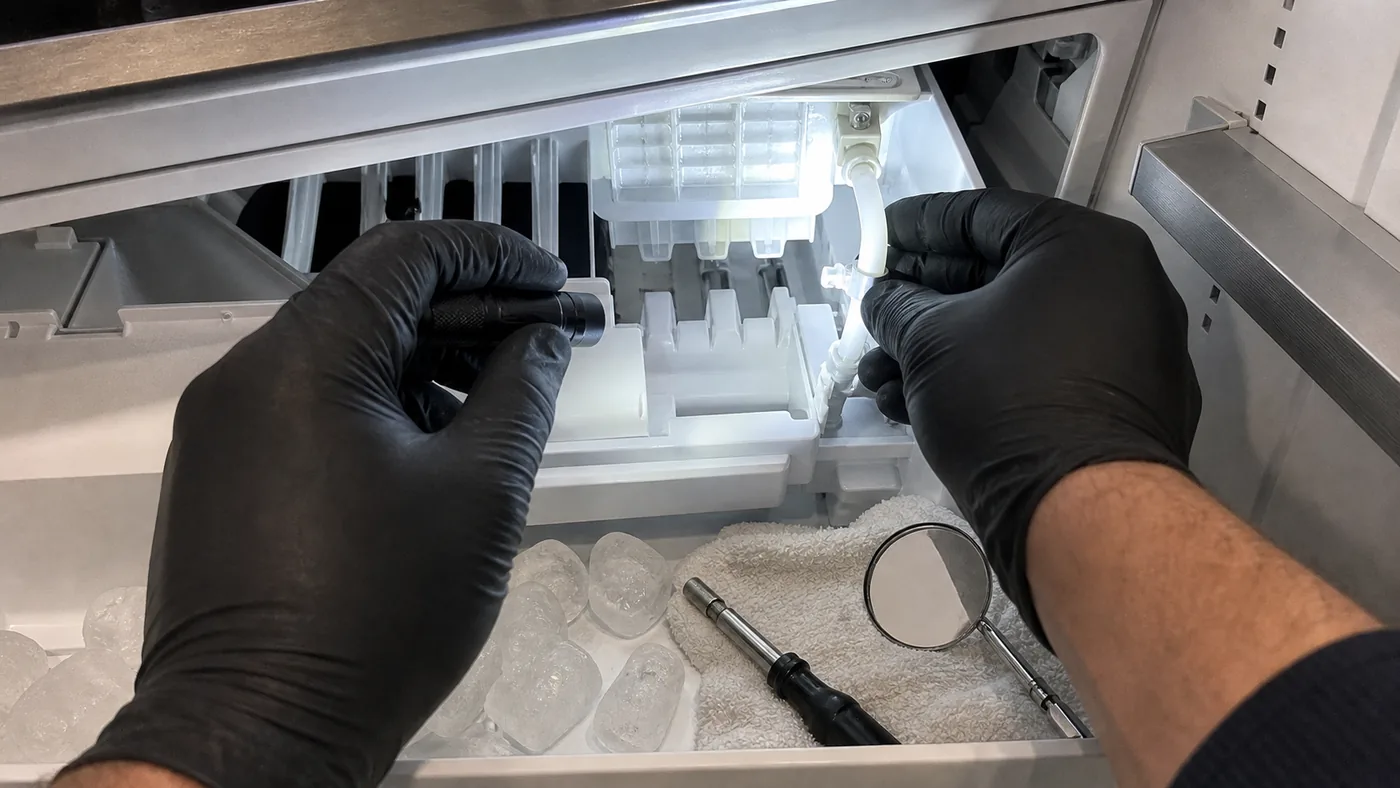
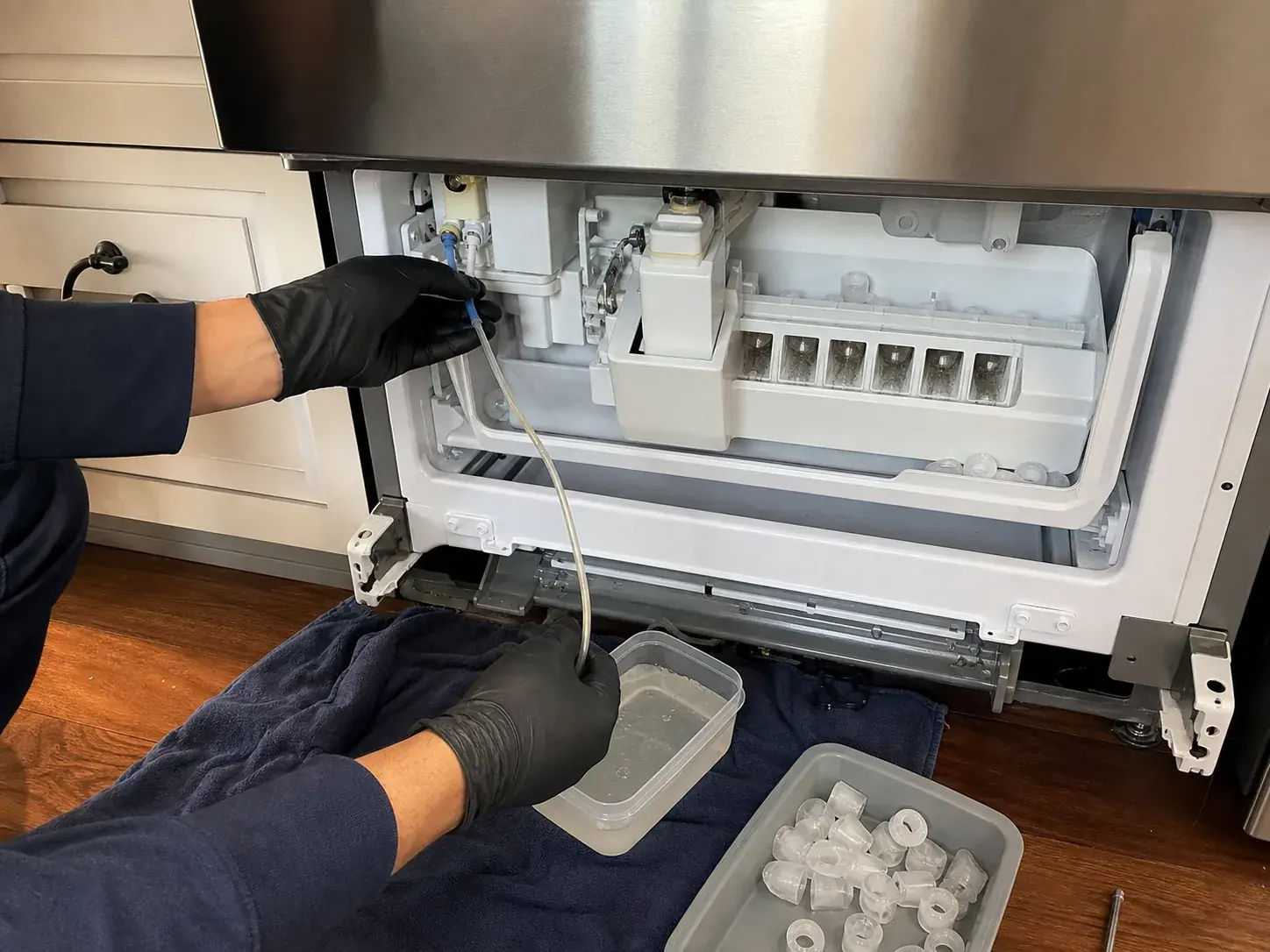
We treat an ice-and-water repair the way a parts counter treats a warranty claim: it is only real if it is documented. The same logic that separates a starved water line from a fresh-food section warm while the freezer still holds applies here — you do not get told what failed, you get shown. Every job leaves with the same evidence list: temperature readings, condenser/evaporator photos, model-number proof, OEM fan/gasket/control-board evidence. For an ice maker that means measured fill volume, a close-up of the inlet valve or fill tube, the serial plate so parts match on the first visit, and a probe reading confirming the mold actually reaches harvest temperature. In Albany, where many kitchens run smaller integrated columns, that documentation is what tells an owner whether the right answer is a quick filter and valve or a fuller module job — before a single part is approved.
Call (510) 390-9712 or use Book Online for a real first opinion on whether it is a filter, a valve, a fill tube or the module, with the diagnostic credited toward the repair.
Hollow cubes almost always mean the mold is not filling with enough water. The usual culprits are a partly frozen fill tube, a weak or restricted water inlet valve, or a clogged water filter starving the line. We measure the actual fill volume per cycle before naming a part, so you are not paying for a guess.
No ice at all usually points to no water reaching the maker: a closed or kinked supply, a failed inlet valve, or a frozen fill tube. Confirm the household shutoff is open and the filter is not months overdue. Do not force a stuck ejector arm — if it will not turn freely, the module or motor may be the issue and forcing it can crack the mechanism.
Yes. A filter past its interval restricts flow, which shows up first as small or hollow cubes and slow production, and later as cloudy or off-tasting ice. Berkeley's harder water can shorten filter life. Replacing an overdue filter is often the cheapest fix, but if cubes are still wrong after a fresh filter, the inlet valve or fill tube is the next suspect.
A slow drip from the inlet valve or supply line should be addressed promptly because it sits against cabinetry and flooring. Shut the household water valve to the unit, leave it off, and request a visit. We trace the leak to the exact fitting, valve or line and replace the failed part with factory-authorized Sub-Zero OEM components rather than patching a compression fitting.
Berkeley's EBMUD water runs soft, roughly 2 to 3 grains per gallon, so limescale on the fill tube and inlet valve is rare here. When ice turns hollow or slow in a Berkeley kitchen, the cause is usually a frozen fill tube, a weak inlet valve, a clogged filter, or low line pressure rather than scale. Typical ice and water repairs run $285 to $640.
Yes. Hillside homes above Claremont and Grizzly Peak can see lower or variable water pressure, and the inlet valve needs adequate pressure to fill the ice mold fully on each cycle. When pressure drops, the mold under-fills and you get small or hollow cubes even with a fresh filter. We check static line pressure during diagnosis before naming a part.
These are the sub-components behind an ice and water repair, priced for the premium East Bay market — the diagnostic is credited toward an approved repair.
| Service / symptom | What it includes | Berkeley price range | Typical time |
|---|---|---|---|
| Diagnostic visit (credited) | On-site inspection, measured fill-volume and line-pressure read, credited toward an approved repair. | $115–$175 | 30–60 min |
| Water inlet valve / water-line repair | Replace a weak or leaking inlet valve, fitting or line section; verify full, steady fills. | $260–$480 | 1–2 hrs |
| Frozen fill-tube clear or replace | Thaw and clear an iced fill tube, correct the freeze cause, or replace a cracked tube. | $240–$430 | 1–1.5 hrs |
| Ice module / ejector assembly | Replace the ejector module or motor when cubes jam, fuse or the arm stalls; confirm a clean harvest. | $320–$640 | 1.5–2.5 hrs |
| Water filter + line-pressure check | Fit the correct OEM cartridge and confirm static line pressure and restored flow. | $115–$210 | 30–45 min |
The final number moves with the Sub-Zero series and model (600, 700-series column, BI or classic), how tightly the unit and shutoff are built into cabinetry, whether the part is OEM-stocked or special-order, and whether the fault is electrical (board, thermistor) or on the water side (valve, tube, line).
The full service page for built-in refrigerators, columns, freezers and wine units.
DiagnosticWhen the fresh-food side runs warm while the freezer still holds — airflow before compressor.
SymptomWater pooling on the floor or under the drawers — defrost-drain and fill-line leaks traced to the source.
BookingUse the external booking page to request a service window.
Feedback on slow, hollow and jammed ice fixed at the source — fill tube, inlet valve, filter or module.
“Turned out to be water volume at the inlet valve, not the ice maker itself. They explained the difference clearly.”
Paul C. · Northbrae
“A cracked fill tube was dripping behind the cabinet where I’d never have spotted it. They caught it early, replaced the line, and saved my hardwood floor from water damage.”
Dana E. · Albany
“They checked the water filter and the ice module before swapping anything, so I didn’t pay for a part I didn’t need. Ice is back to full, solid cubes.”
Omar J. · Kensington
Local dispatch reference: 1935 Addison St, Suite A, Berkeley, CA 94704. Appointments are arranged by phone or online booking.
Many ice and water faults announce themselves on the panel first — read the code before you reset it.
UpkeepYearly cartridge swaps and line-pressure checks are exactly what the maintenance plan keeps on schedule.
ServiceFrom hollow cubes to a full warm box — the main service page covers every cold-side repair we run.