

Berkeley Hills column, 16 years
- Factors
- Young for a built-in, fan part in stock, flush in custom cabinetry.
- Matrix read
- Age, parts and cabinet impact all lean repair.
- Likely call
- Repair — replacement would disturb millwork for no gain.
For most built-in Sub-Zero units we see in the Berkeley Hills, the honest answer is repair — a condenser coil packed with dust or pet hair, a tired evaporator fan, or a thermistor is a few hundred dollars against a built-in that costs many thousands plus cabinetry work to swap. But replacement is sometimes the right call, and we will say so. Fog-driven humidity and decades of service age these cabinets unevenly, so the deciding factors are unit age, part availability and how much millwork a replacement would disturb. Call (510) 390-9712 or use Book Online and we will weigh repair versus replacement with you.

Stalled evaporator fan, cabinet sound. Repaired for a fraction of replacement; cabinetry untouched.
Compressor on an obsolete model, part chain dry. Replacement was the honest decision.
Repair held the unit; owner timed replacement to a planned kitchen remodel instead.
In plain language: the rubber seal around the door is supposed to hold the cold in and Berkeley's damp marine air out. When that door gasket leak, condensation or frost line shows up — a strip of frost along one edge, beads of sweat on the cabinet face, or a unit that hums almost constantly — warm humid air is leaking past a gasket that has swollen, hardened or torn. The box keeps running to fight the intrusion, which looks alarming but is usually a cheap, contained fault, not a dying compressor.
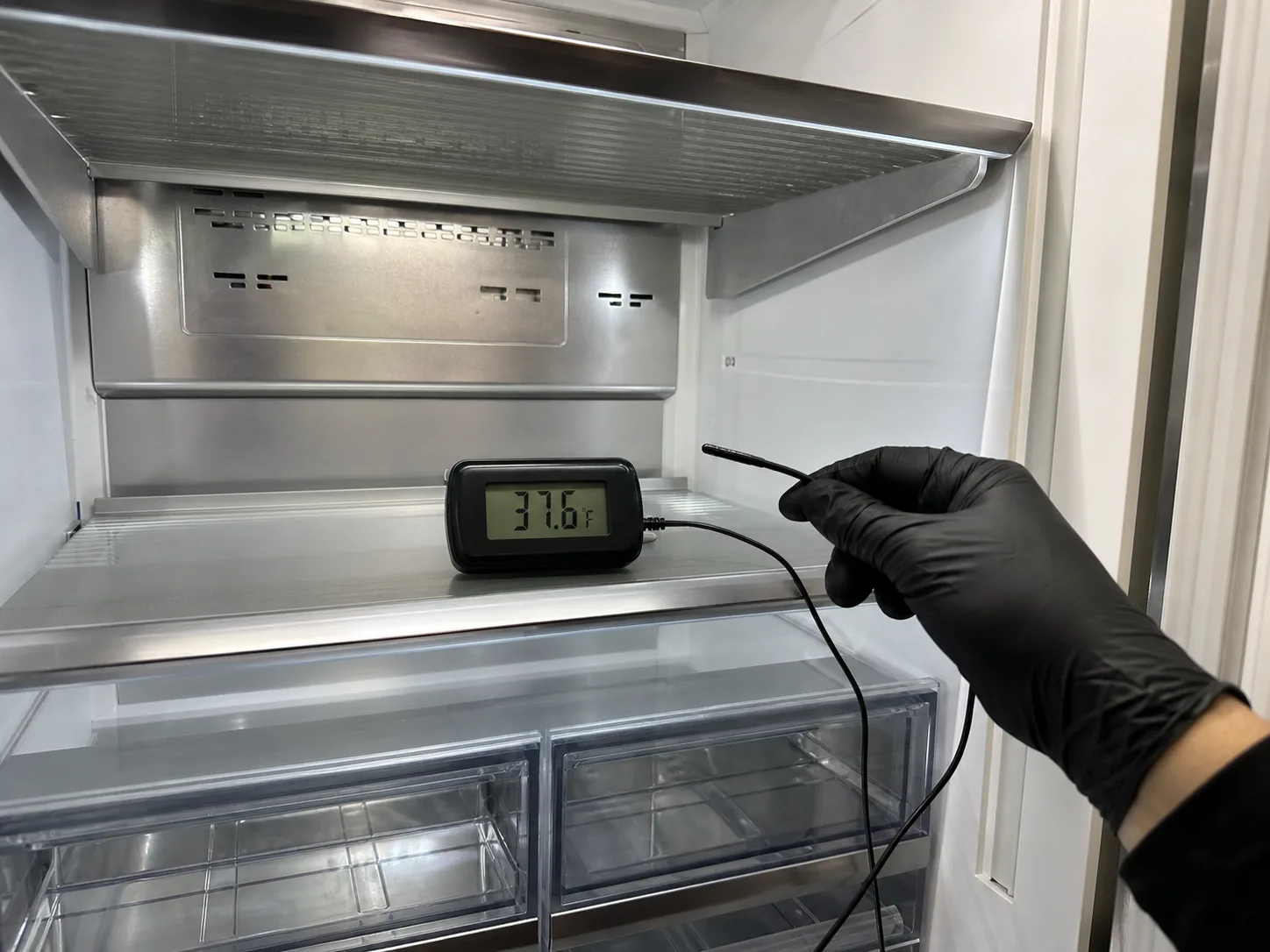
What diagnosis confirms it: a technician runs a slip of paper or a thin gauge around the seal to find where it has lost grip, checks the gasket for compression set and splits, and takes a temperature reading to see whether the leak alone explains the drift. That is the difference between a confident gasket replacement and a guess. The honest limitation: a frost line can also be a downstream sign of a defrost or sealed-system problem, so a seal that looks fine on inspection means we keep looking rather than calling the job done. The gasket is the first suspect, not the automatic verdict.
No single number decides this. We weigh six criteria, and most units land with the majority leaning one direction. Use it as a worksheet — the column on the right shows what pushes a factor toward repair versus toward replacement.
| Criterion | Leans repair | Leans replace | Weight |
|---|---|---|---|
| Unit age | Under ~18 years; design life remaining | 25+ years with multiple prior failures | High |
| Cabinet / remodel impact | Flush-set in custom millwork you want to keep | Kitchen remodel already planned or underway | High |
| Part availability | OEM fan, gasket, board or valve in stock for serial | Obsolete model; part chain dry or back-ordered | High |
| Safety | Electrical/airflow fault, no refrigerant breach | Repeated sealed-system or electrical hazards | Medium |
| Repair cost | Repair well under a third of replacement | Quote approaches half a new built-in installed | Medium |
| Replacement disruption | Cabinet pull is clean; little millwork at risk | New panel-ready size means cabinetry rework | Medium |
When age, part availability and cabinet impact all lean the same way, the decision is usually clear. When they split, the dollar figures and the disruption column break the tie.
Replacing a freestanding mass-market refrigerator is mostly the price of the appliance — you wheel the old one out and the new one in. A built-in Sub-Zero is a different equation. The unit is integrated into the kitchen: it sits flush in a dedicated cabinet opening, frequently panel-ready so its front matches the surrounding millwork, with precise height, depth and grille clearances. Swap it and you are not just buying an appliance; you may be reworking cabinetry, panels and trim so the new size fits the old hole.
That integration is the whole reason Sub-Zero built-ins are engineered for a decades-long design life. A 20-year-old unit is often only mid-life, and the parts that wear — fans, gaskets, thermistors, control boards — are serviceable. So the repair math leans favorable far longer than it would on a commodity fridge, because the alternative carries cabinetry cost on top of the appliance.
These are constructed examples to show how the matrix plays out — not records of specific customers. They illustrate how age, parts and cabinetry tip the decision.
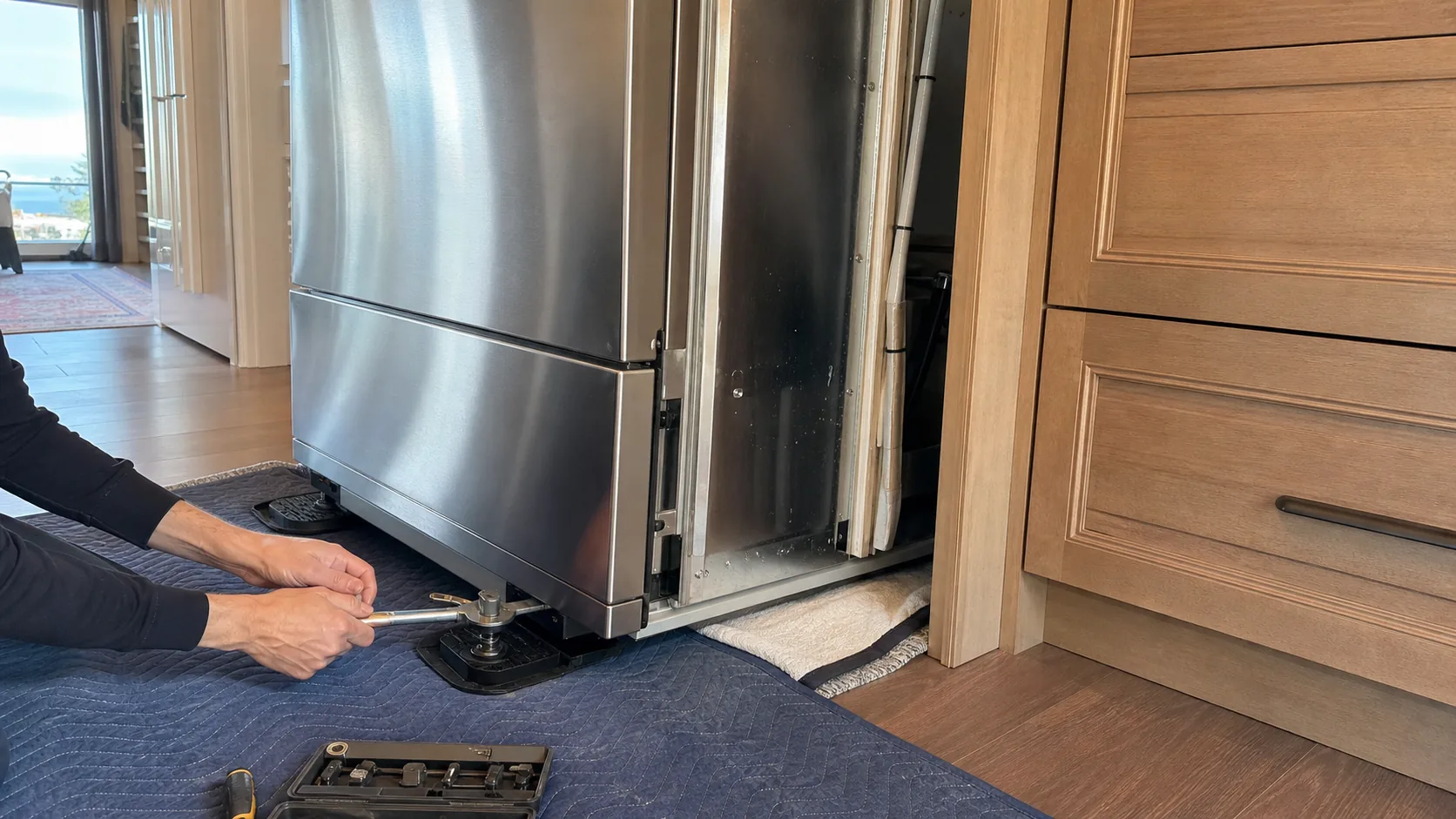

The decision is never purely financial here, because the cabinetry is part of the value. In Claremont we see large 600-series cabinets and wine columns set into substantial built-ins, frequently 15 to 25 years old — old enough that age and damp air matter, but built into kitchens that owners have no wish to tear apart for an avoidable replacement. That is exactly where the matrix earns its keep: a repairable fan or board keeps a sound cabinet in service for years.
Over in Elmwood, the pattern shifts to renovated Craftsman homes with integrated units in custom millwork, where the careful part of any service — or any replacement — is protecting that woodwork while the unit comes forward for condenser and fan access. When an Elmwood owner asks whether to replace, the honest answer usually starts with "what will it cost the cabinetry?" rather than the appliance price alone. The millwork is the reason repair stays competitive far longer on these built-ins than on a commodity fridge.
The most consequential repair-vs-replace cases turn on a sealed-system suspicion that needs EPA-certified verification — because if the compressor or refrigerant circuit has genuinely failed on an older built-in, the economics shift hard toward replacement, and that is too big a call to make on a hunch. So we confirm it with instruments and certified handling, not a hopeful diagnosis, before anyone talks about a new unit.
Whichever way the decision lands, you should expect to receive the evidence behind it:
For the full sealed-system picture, see the sealed system & compressor page; for what the invoice and parts documentation cover, the parts & warranty page.
Ranges, not promises. The exact number depends on the part, the model and the cabinet, which is why anything precise is held as a slot for owner confirmation rather than published as false certainty.
When the repair quote climbs toward the sealed-system band and the unit is past 25 years, that is the line where replacement deserves a serious look.

Have the model number and the symptom and we will give you a real repair-vs-replace read — weighed against unit age, part availability and your cabinetry, not a push to buy a new box. If repair is the smart call, we will say so; if replacement is, we will say that too.
The full service page for built-in refrigerators, columns, freezers and wine units.
TechnicalThe expensive failure that most often tips a built-in toward replacement.
TrustOEM parts, what the invoice documents, and where serial matching matters.
In premium East Bay kitchens, a built-in's value lives partly in the cabinetry, so the right path turns on what is actually failing and what a replacement would disturb. These ranges set the two paths side by side.
| Path | What it covers | Berkeley cost | When it makes sense |
|---|---|---|---|
| Diagnostic visit (credited) | confirm the actual fault with evidence | $115–$175 | always first |
| Common repair (gasket, fan, sensor, valve, board) | single-component fix on a sound cabinet | $250–$960 | unit otherwise healthy |
| Sealed-system / compressor repair | refrigerant-side repair on a built-in | $1,700–$3,400 | quality 600/700-series worth keeping |
| New built-in column/unit, installed | replacement incl. fitting to custom cabinetry | $9,000–$18,000+ | multiple systems failing / obsolete |
| Custom panel re-use or refit | keep panel-ready front on a new unit | $400–$1,200 | replacing but cabinetry is good |
What moves the decision is rarely the appliance alone: the failing component (a board or fan versus the sealed system), the unit's series and age, part availability for that serial, and how much custom millwork a replacement would force you to rework.
Rule of thumb in Berkeley: repair a Sub-Zero when the quote is under about 50% of installed replacement (often $9,000–$18,000+ here) and the cabinet is sound.
The rule of thumb: repair when the quote is well under about 50% of installed replacement and the cabinet and sealed system are otherwise sound. A $250–$960 part fix on a healthy unit almost always beats a $9,000+ replacement, because you keep the cabinetry and avoid the millwork rework a new built-in forces.
Premium East Bay installs commonly run $9,000–$18,000+ once you include fitting to custom millwork and panel-ready fronts. That is far above most repairs, which is exactly why a confirmed single-component fault on an otherwise sound cabinet usually points toward repair rather than a five-figure replacement here.
Often yes — these 600/700-series cabinets are built to last, and a $1,700–$3,400 sealed-system repair can be worthwhile versus a five-figure replacement. The exception is when several systems are failing at once or parts have gone obsolete, at which point the economics tip toward a new built-in instead.
A failed compressor combined with other aging parts, obsolete or unavailable components, or a cracked liner and foam damage are the failures that tip toward replacement. One isolated fault — a fan, a gasket, a board — rarely justifies replacing a built-in that is otherwise sound and still has serviceable parts.
Often yes — panel-ready Sub-Zero replacements can reuse or refit the existing front for about $400–$1,200, which protects your kitchen's look. Keeping the panel means the new unit blends into the surrounding millwork rather than forcing a visible mismatch or a full cabinetry rework.
Newer units are more efficient, but in Berkeley's mild climate the energy savings rarely offset a five-figure replacement on their own. Condition and repair cost should drive the call: if a sound cabinet needs only a modest fix, efficiency gains alone are not enough to justify replacing it.
Berkeley owners on getting a straight comparison before spending on a new unit.
“They laid out the cost of a control board and fan against a new built-in, honestly. My old 600-series was solid otherwise, so it was worth fixing — and they fixed it.”
Diane R. · Thousand Oaks
“On a second fridge with a failed sealed system they said replacement made more sense than the repair. I appreciated the honesty over an easy sale.”
Alan K. · Albany
“They gave me the numbers for both paths — repair the compressor or replace the cabinet — and let me make the call myself. No pressure either way.”
Monica L. · Piedmont
Local dispatch reference: 1935 Addison St, Suite A, Berkeley, CA 94704. Appointments are arranged by phone or online booking.