
A schedule I actually follow
“The calendar made it obvious when to vacuum the condenser behind the grille — twice a year for us with two cats. Simple to follow, and the unit runs quieter for it.”
Ian R. · Northbrae
If your Sub-Zero ice maker has turned slow, jammed or started producing hollow cubes — a frequent winter complaint in Elmwood kitchens — the fix is often upstream of the part: a fouled condenser and a damp door gasket make the whole cold side work harder. Berkeley's marine layer, salt air off the bay and long fog cycles change how a built-in ages, so the upkeep schedule here is not the generic one in the manual. This calendar ties each task to the local season. It is honest about limits: routine cleaning prevents a lot, but if a unit is already drifting, request a diagnostic rather than wait for the next calendar entry.

"Wine column drifting several degrees" is the plain way of saying the cabinet can no longer hold the set point steadily — you dial 55°F for the reds, but the zone wanders to the low 60s by afternoon and back overnight. In a dual-zone Sub-Zero that swing usually traces to one of three things: a tired thermistor reading the air wrong, an evaporator fan that no longer moves cold evenly, or a door seal letting Berkeley's damp air seep in. Diagnosis confirms which by logging the actual temperature against the display over a cycle and watching where the cold collapses. The limitation is honest: a calendar slows this kind of drift, but it cannot reverse a failing sensor or a board that has already started mis-reading — that needs a measured repair, not another cleaning.
This is not a generic checklist. Each window below is driven by what Berkeley's air is doing — winter rain and rising humidity, spring pollen and grit, the dry-then-foggy summer, and the salt-laden marine push of late year — and how that load shows up on a Sub-Zero's condenser, gaskets and water side.
| Window | Berkeley climate driver | Priority task | Why now |
|---|---|---|---|
| Jan–Feb Wet winter |
Peak humidity, persistent damp; gaskets swell and stay wet. | Door-gasket inspection; wipe and dry seal channels; watch for a frost line. | Swollen rubber and condensation are worst now, so a marginal gasket reveals itself before summer load. |
| Mar–Apr Spring grit |
Pollen, drying breezes and household dust circulate. | First condenser cleaning of the year; check for pet hair packing the lower coil. | Fresh airborne grit settles on the coil fast; clearing it before warm months keeps head pressure down. |
| May–Jun Dry warm-up |
Warmer kitchens, longer compressor run times. | Water-filter change; verify ice maker volume and cube quality. | Higher demand on the cold side exposes a slow or hollow-cube ice maker before guests arrive. |
| Jul–Aug Fog cycles |
Daily marine layer; humidity climbs every evening. | Mid-year condenser re-check; confirm door seals close clean after warm-day swelling. | Fog re-wets gaskets nightly; a coil that looked fine in spring can re-foul in a humid summer kitchen. |
| Sep–Oct Indian summer |
Hottest stretch inland; peak condenser stress. | Log compartment temperatures over a day; check wine zone for drift. | When a borderline thermistor or fan finally shows as a wandering set point. |
| Nov–Dec Salt-air push |
Onshore marine flow carries salt; condenser corrosion accelerates. | Year-end condenser clean and corrosion look; second water-filter swap if usage is high. | Salt deposits on coil fins corrode and insulate them; clearing before winter damp protects the sealed side. |
Each task below is framed the same way: why it matters, what an owner can safely do, and when to stop and decision. Nothing here asks you to open the sealed system.
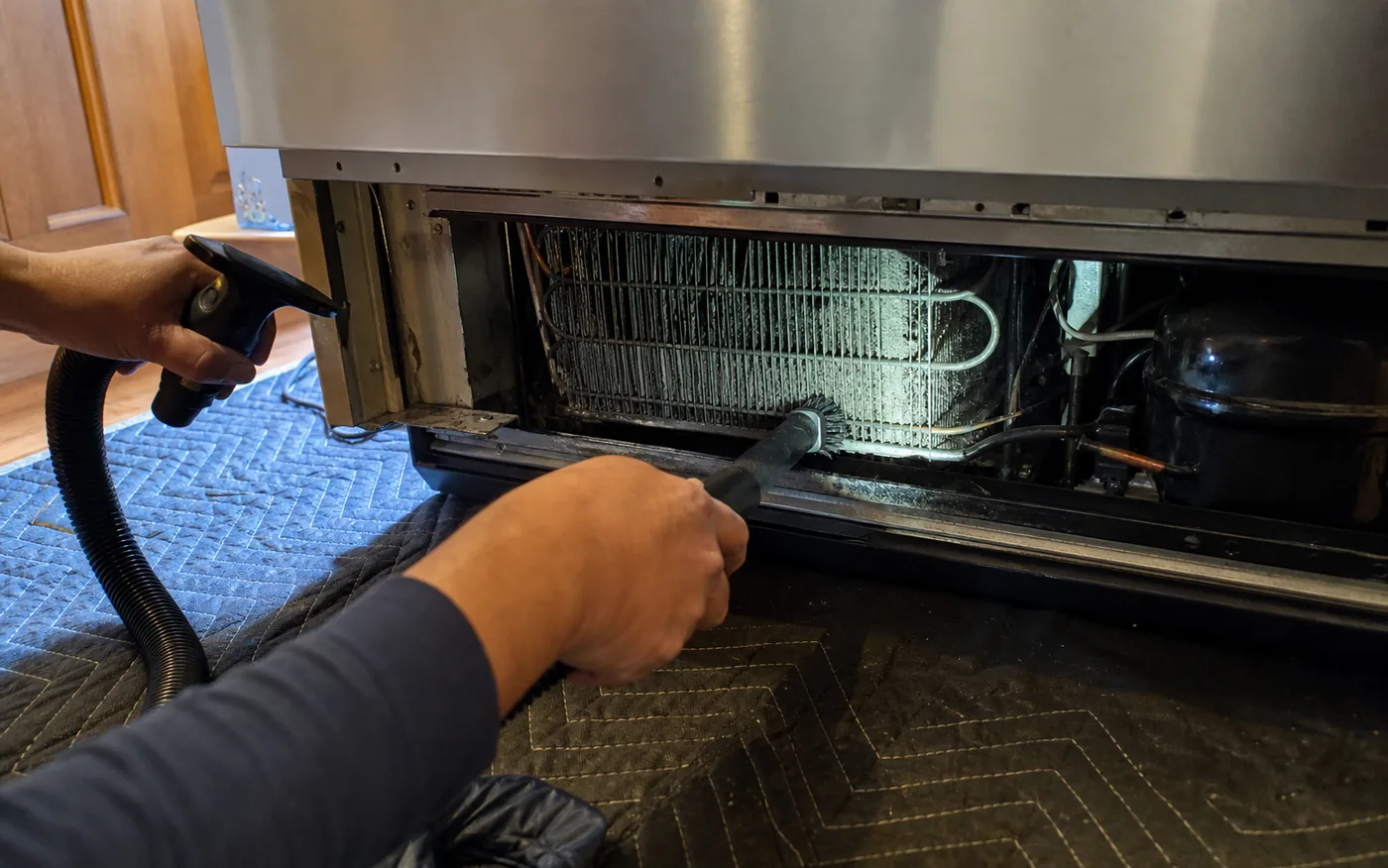
Why it matters: a coil packed with dust or pet hair makes the compressor run non-stop and run hot.
Owner can: brush and vacuum the exposed grille coil two to four times a year.
When to call: visible fin corrosion, or running stays loud after a thorough clean.
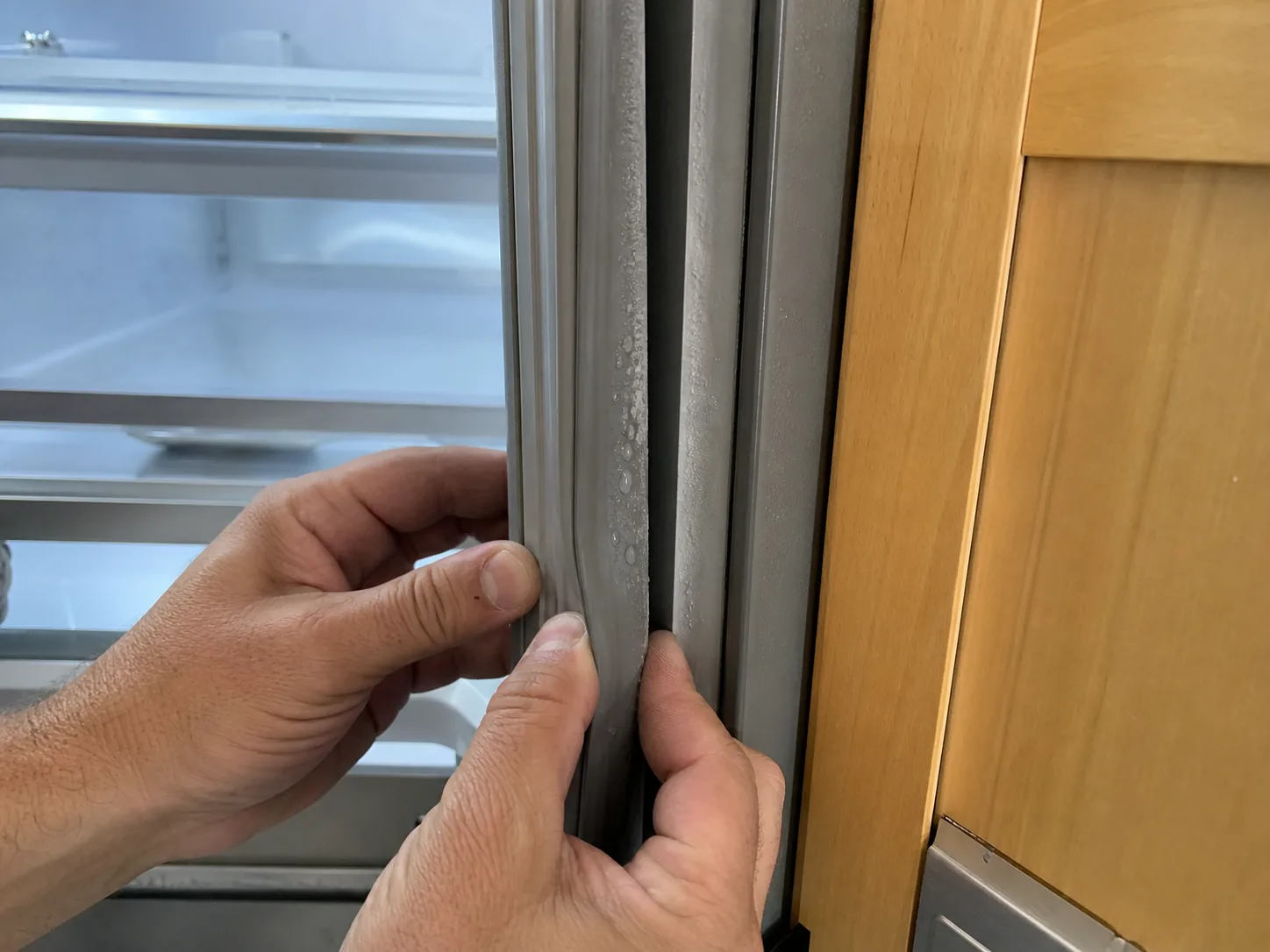
Why it matters: Berkeley damp swells the rubber; a poor seal means a frost line and a unit that never rests.
Owner can: wipe the gasket clean, dry the channel, and run a dollar-bill drag test for grip.
When to call: a tear, a permanent gap, or condensation that returns within a day.
Why it matters: a clogged filter starves the ice maker, giving slow, jammed or hollow cubes.
Owner can: swap the OEM cartridge on the model's interval and flush a few quarts after.
When to call: low fill volume persists after a fresh filter and a checked inlet.
Why it matters: hollow or undersized cubes are an early read on water volume or a tired module.
Owner can: note cube shape and cycle timing; clear a soft jam by hand power-off.
When to call: a stuck ejector arm or repeated jamming — do not force it.
Why it matters: a few degrees of drift over a season can spoil a collection quietly.
Owner can: place an independent thermometer in each zone and compare to the display.
When to call: logged temperature and display disagree, or a zone wanders by several degrees.
Why it matters: blocked vents mimic a failing system — fresh-food warm while the freezer holds.
Owner can: leave clearance around interior vents and avoid over-packing shelves.
When to call: a frosted evaporator or a fan you can hear straining behind the panel.
These are the parts you can see and tend without tools. Everything behind a sealed panel is for a technician.
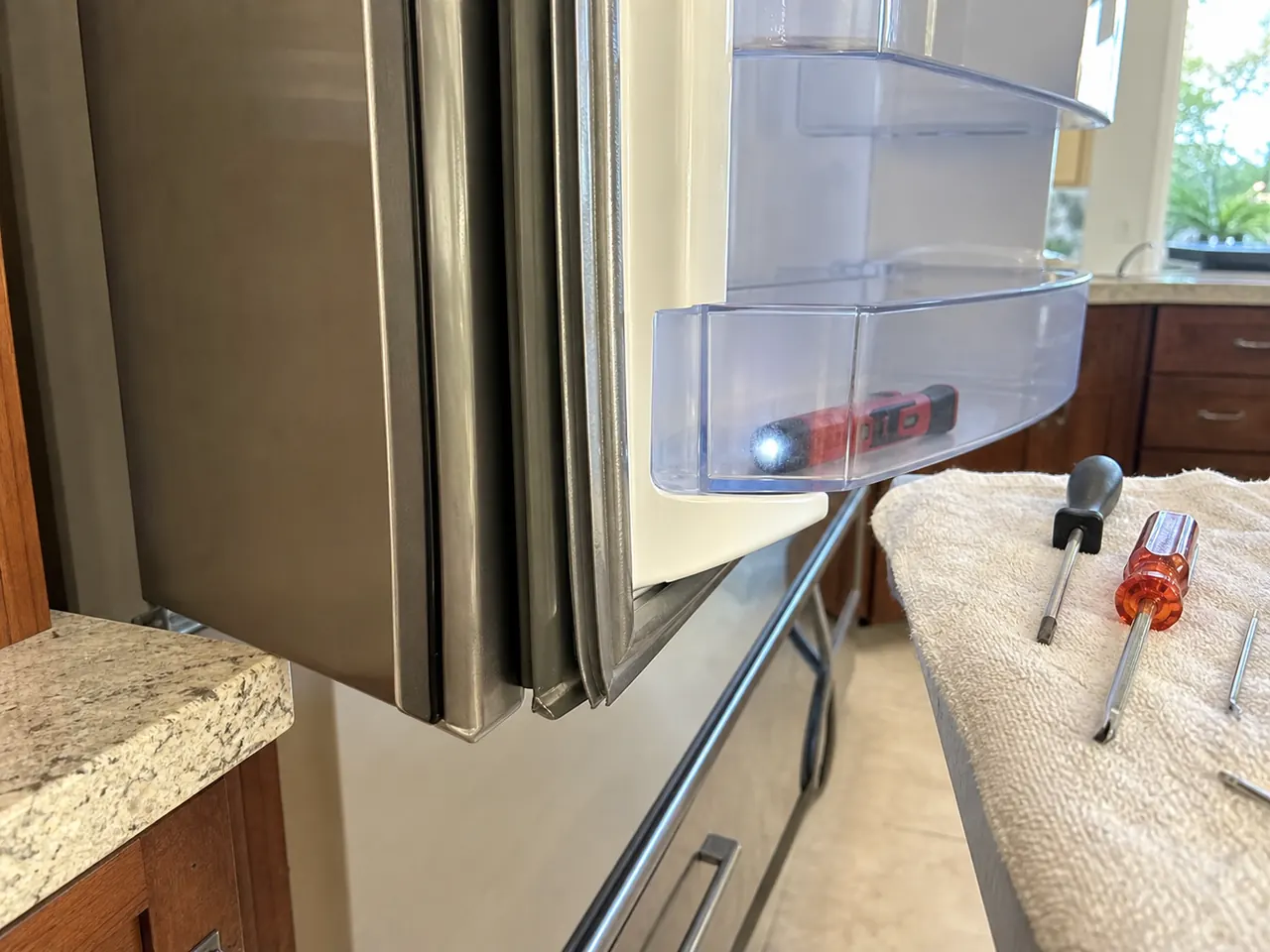
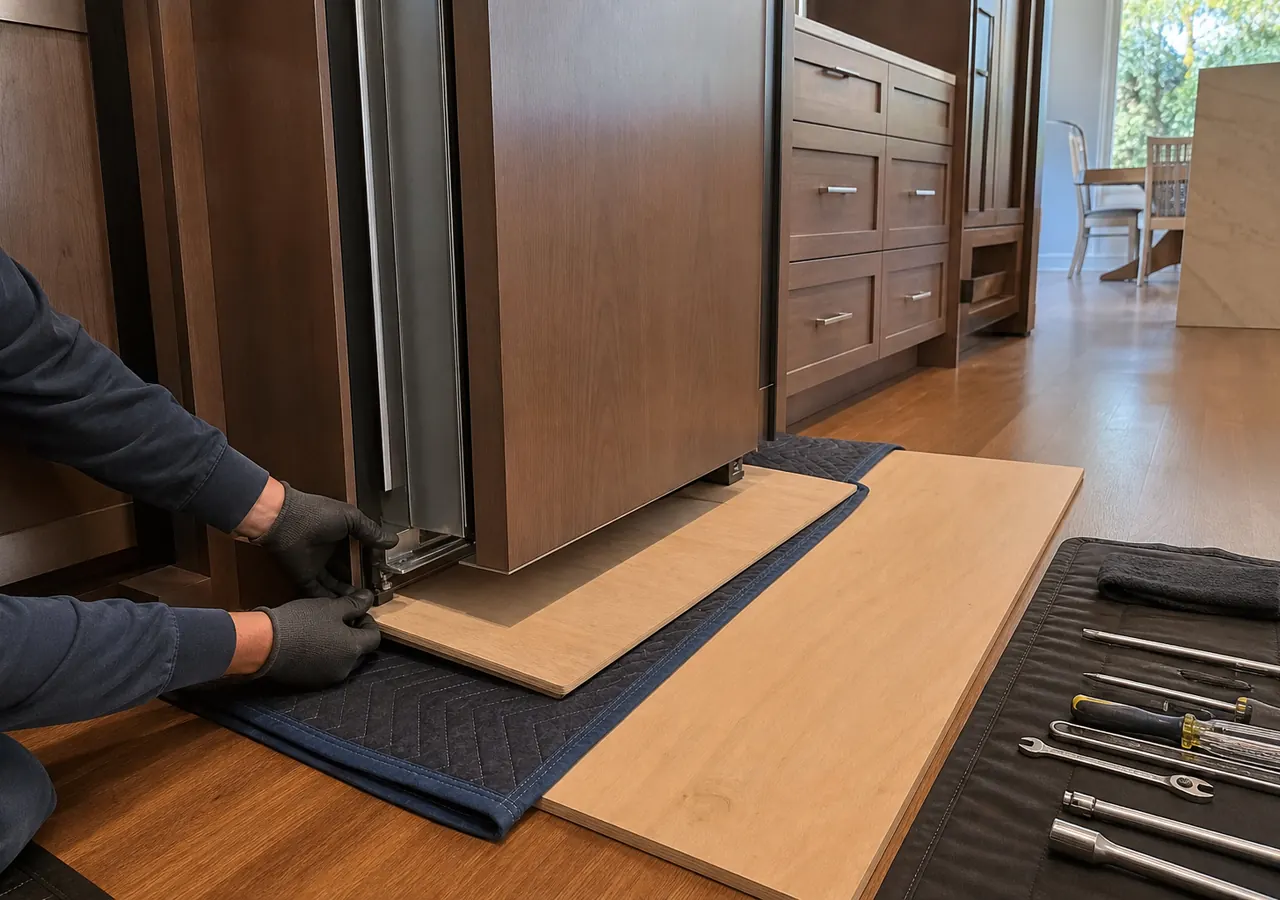
Technician-only: the evaporator behind its interior panel, the sealed refrigerant loop, and the control board are not owner-maintenance areas. Do not pick frost off the evaporator, do not pull the unit out on tile or wood by yourself, and never open anything carrying refrigerant — that work is metered, EPA-handled and out of scope for a calendar.
In a Thousand Oaks bungalow last fall, a mid-century built-in was running loud through the Indian-summer stretch; the calendar entry that mattered was the year-end condenser clean, and clearing a salt-and-dust packed coil settled the cycling without touching the sealed system. That pattern repeats across the area, and the schedule shifts a little by where you are.
Fog rolling off the bay keeps humidity high above Grizzly Peak, so gasket checks move earlier and matter more here than the manual suggests.
Older 600-series cabinets and wine columns near the Claremont Hotel are exactly where seasonal temperature logging catches drift before a collection suffers.
On our nearby routes, flatland kitchens see less fog but the same spring grit, so condenser cleaning stays the anchor task.
In Northbrae's tight galley kitchens we plan the condenser pull before the visit, so seasonal access never means scuffed millwork.
A calendar prevents a lot, but some faults — a failing control board, thermistor or display alarm — are past the reach of cleaning and need measurement. When that is the case, we treat the visit like a warranty claim: it is only real if it is documented. You should expect the same evidence with any Berkeley job — temperature readings, condenser/evaporator photos, model-number proof, OEM fan/gasket/control-board evidence — before any part is named or any quote is given. That is the line between maintenance you can see and a guess you pay for.

If a calendar task has turned up something real — ice that stays slow or hollow, a wine zone that keeps drifting, or a display alarm that will not clear — the next step is a measured look, not another cleaning. Call (510) 390-9712 or use Book Online for a real first opinion.
Match your symptom first: Not-cooling evidence, door gasket & seal repair, or the full Sub-Zero repair page.
Berkeley Sub-Zero timing: deep-clean the condenser in late spring and early fall to bracket fog season; hillside homes with pets benefit from 2×/year.
If you would rather not track these dates yourself, the Berkeley Sub-Zero maintenance plan turns this same seasonal rhythm into scheduled visits, with the condenser cleans timed around fog season for you.
Late spring before the summer fog season and again in early fall; the marine layer and hillside dust load coils through the foggy months, so bracketing that period keeps airflow and head pressure healthy.
The fog months raise indoor humidity and deposit fine grit, stressing gaskets and condensers; that's why a spring pre-clean and a fall post-clean matter more here than in dry inland areas.
Berkeley Hills homes — especially with pets — should clean the condenser twice a year; slope dust and fog drip pack the coil faster than in the flats, making the compressor run long.
Checking door/zone seals and recalibrating zone temperatures before summer; humidity loads wine-unit seals, and catching drift early protects the collection.
Somewhat — soft water (~2–3 grains/gal) means little scale, so the ice system mainly needs a yearly filter change and a line/pressure check rather than frequent descaling.
Berkeley owners on the seasonal maintenance rhythm for built-in refrigeration.
“The calendar made it obvious when to vacuum the condenser behind the grille — twice a year for us with two cats. Simple to follow, and the unit runs quieter for it.”
Ian R. · Northbrae
“Sticking to the seasonal checks — condenser, door gasket, drain — we haven’t had a warm fresh-food scare in two years. Worth the few minutes.”
Tessa M. · Albany
“Knowing when to inspect the door gaskets for our damp marine air and clear the coil keeps the older built-in healthy. The reminders are exactly the right cadence.”
Bruce K. · Kensington
Local dispatch reference: 1935 Addison St, Suite A, Berkeley, CA 94704. Appointments are arranged by phone or online booking.